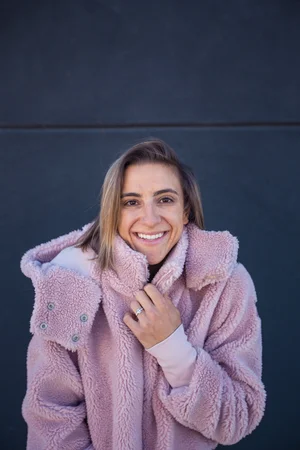
161: Rocio Cortez: Performance Over Aesthetics and Why it’s Never Too Late to Start
You Weren’t Born an Athlete. You Can Still Become One.
Rocio Cortez never played a sport growing up. She’d never set foot in a weight room. Then, at 27, she walked into her first jiu-jitsu class.
Today she trains wrestling, striking, MMA, Muay Thai and jiu-jitsu. She’s competed twice at Apex, an eight-event strength and athleticism competition, and she deadlifted 275 pounds for reps when she’d never lifted that much before. Her words: she’s “giving these kids a run for their money.”
In the latest episode of the Broads podcast, Tara sits down with Rocio to talk about what happens when you stop training for how you look and start training for what you can do. They get into starting “late,” body image, the friendships that fade when your life changes, and why your phone might be the thing holding you back.
If you’ve ever told yourself it’s too late to start, this one’s for you.
“You’re Here Now, So Just Do It”
Rocio’s biggest hurdle wasn’t learning the moves. It was the frustration of starting so late.
She picked things up fast, and people told her she was good. But all she could think about was the time she’d lost. “I’m past my prime,” she remembers thinking.
So how did she get past it? “Just by continuing to do it,” she says. “So what? I started this later in life than I wanted to, but you’re here now, so just do it.”
And starting didn’t age her. It did the opposite. At 25, working full time and going to school full time, she was exhausted constantly. Now, at 32, people tell her she looks younger than she is. Her secret? “I work out and I sleep. Lots and lots of sleep.”
Do You Have to Compete to Be an Athlete?
For Rocio, competing is what makes her feel like an athlete. Tara sees it differently. If you’re progressing at something over time, you’re an athlete. Hitting your first pull-up? Lifting heavier than last month? That counts.
Where they agree: competition shows you what you’re capable of. As Rocio puts it, “It brings a different person out of you.”
Performance Over Aesthetics
As a teenager, Rocio was deep in the “be smaller” mindset. She did hundreds of crunches a day and wrapped her stomach to make it flatter.
When she started training for performance instead, putting on muscle messed with her head at first. Her clothes stopped fitting. What helped most was progress pictures. “There were days that I just absolutely hated my body. But then when I compared it to me three months ago, I’m like, oh dang, I actually look better.”
So she stopped training for the mirror and trained for the goal: get faster, jump higher, get stronger. “The body just naturally followed suit. I didn’t try to look this way.”
It didn’t happen fast. It took three and a half years with her coach, and the first six months were mostly about just getting herself to the gym. Now she says, “I’m very, very happy with my curvy body.”
Your Circle Changes When You Do
Rocio believes you are who you surround yourself with. That also means some friendships fade when your life changes. Some she cried over. Others she let go of on purpose, because she wanted to wake up early and train, not stay out late.
Her advice: give yourself time to grieve it, then keep going. And remember that real friends adjust. “We can meet for brunch. How about let me just go to the gym with you?”
The Bottom Line
You don’t need a sports background. You don’t need to start young. And you don’t need to train for a certain look to see your body change.
Rocio’s final advice? “Get a coach. It’s definitely worth having someone do the thinking for you.”
That’s exactly what we do at BroadsCOACH. We work one-on-one with women over 35 on their training, nutrition and lifestyle so they get stronger and feel more confident in their bodies. Apply for BroadsCOACH today.